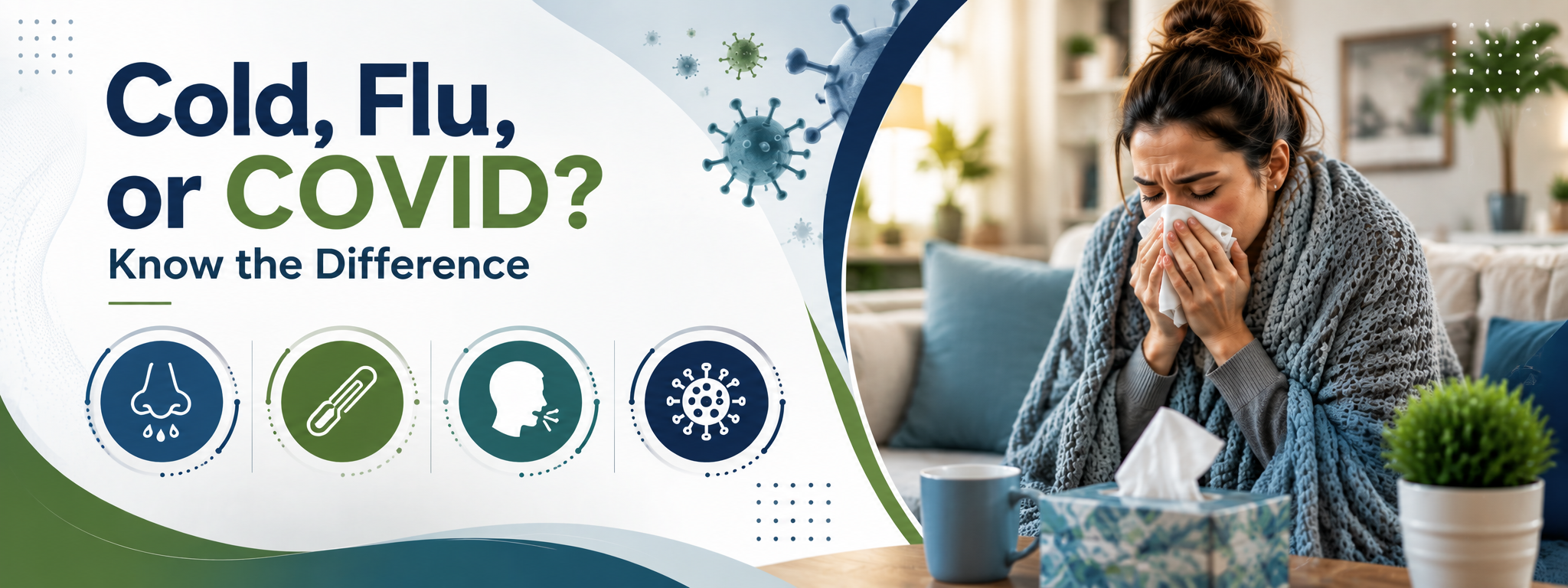
Cold, Flu, or COVID? Know the Difference
Runny nose, sore throat, cough, fatigue — these symptoms could point to a dozen different things. Knowing when to rest and ride it out versus when to call your doctor isn’t always obvious. This guide can help you make that call with more confidence.
Common Cold
Colds are caused by viruses and typically develop gradually. Symptoms include a runny or stuffy nose, sneezing, mild sore throat, mild cough, and low-grade or no fever. Colds usually resolve in 7-10 days and are managed with rest, fluids, and over-the-counter symptom relief. Antibiotics do not treat viral infections.
Influenza (Flu)
Flu comes on suddenly and hits harder than a cold. Hallmark symptoms include high fever, severe body aches, extreme fatigue, headache, and dry cough. Antiviral medications are most effective when started within 48 hours of symptom onset — call your provider promptly if you suspect the flu.
COVID-19
COVID-19 symptoms overlap significantly with flu and include fever, cough, fatigue, sore throat, congestion, headache, and in some cases, loss of taste or smell. Testing is the most reliable way to distinguish COVID-19 from other illnesses. If you test positive and are at higher risk, contact your provider promptly to discuss antiviral options.
Strep Throat
Strep throat is a bacterial infection that does require antibiotics. It’s characterized by severe sore throat, pain with swallowing, fever, swollen tonsils, and notably — no cough. A rapid strep test at your provider’s office gives results in minutes.
When to Seek Care Right Away
See your doctor if you have difficulty breathing, chest pain, a fever above 103°F that won’t respond to medication, symptoms improving then suddenly worsening, severe headache with stiff neck, or symptoms lasting more than 10 days without improvement.
Frequently Asked Questions
Do I need to see a doctor for every cold?
Not necessarily. Most colds are mild, self-limiting, and resolve within 7-10 days with rest, fluids, and over-the-counter symptom relief. You should see a doctor if symptoms are severe, last more than 10 days, include a high fever, or if you have a chronic health condition that puts you at higher risk for complications.
Is it too late to take antiviral medication for the flu?
Antiviral medications like oseltamivir (Tamiflu) are most effective when started within 48 hours of symptom onset. However, your provider may still recommend them after that window if your symptoms are severe or if you are in a high-risk group, such as older adults, pregnant women, or those with chronic conditions.
How long am I contagious with a cold or flu?
With a cold, you are typically most contagious during the first 2-3 days of symptoms. With the flu, adults are generally contagious from about 1 day before symptoms appear until 5-7 days after becoming sick. Children may be contagious for longer. Staying home and practicing good hand hygiene protects the people around you.
Further Reading
Trusted external resources on preventive care.
Share this post: