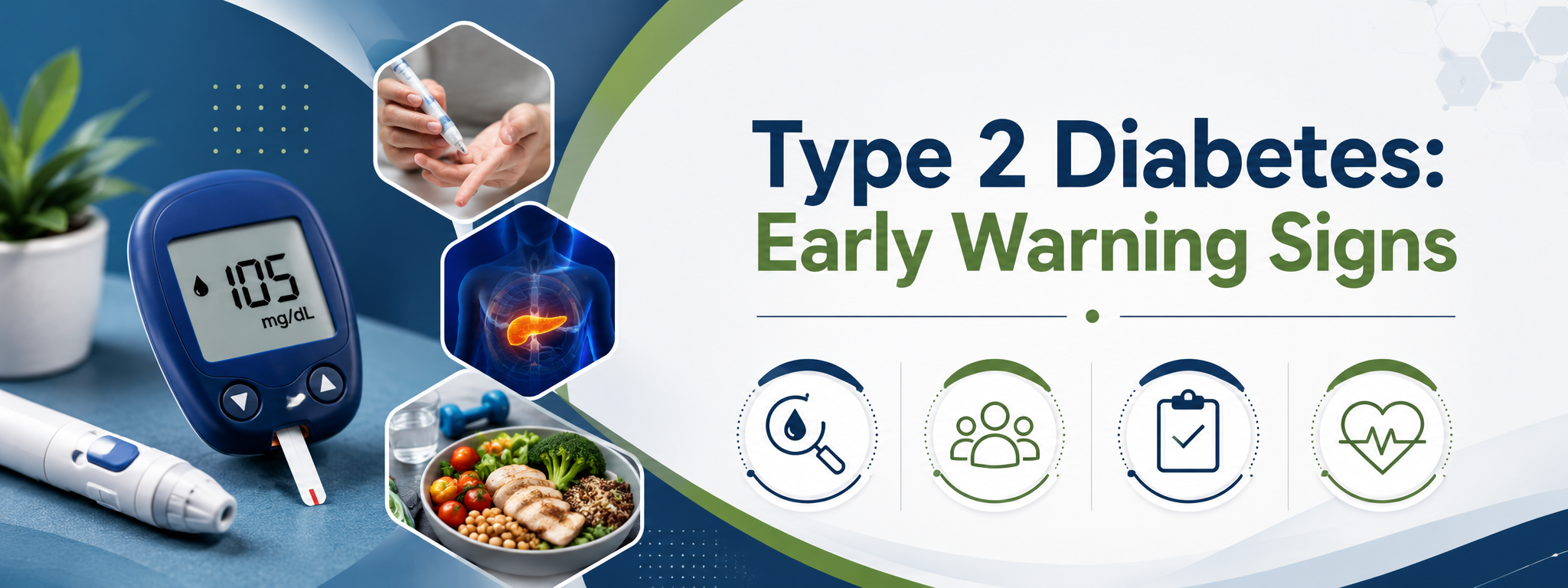
Type 2 Diabetes: Early Warning Signs
More than 37 million Americans have diabetes, and another 96 million have prediabetes — many without knowing it. Type 2 diabetes is one of the most common conditions managed in primary care, and when caught early, it’s very manageable. Understanding the early warning signs could make all the difference.
What Is Type 2 Diabetes?
Type 2 diabetes occurs when your body either doesn’t produce enough insulin or doesn’t use it effectively. Insulin is the hormone that moves sugar (glucose) from your blood into your cells for energy. When this process breaks down, blood sugar builds up and, over time, damages blood vessels, nerves, kidneys, eyes, and the heart.
Early Warning Signs
Many people have no symptoms at all in the early stages. When symptoms do appear, they may include increased thirst and frequent urination, unusual fatigue, blurry vision, slow-healing cuts or sores, frequent infections, tingling or numbness in hands or feet, and unexplained weight loss. If any of these sound familiar, speak to your primary care provider.
Who Is at Higher Risk?
Your risk is higher if you are overweight or obese, are over age 45, have a family history of diabetes, are physically inactive, have had gestational diabetes, or have prediabetes. The good news: many risk factors are modifiable.
How Is It Diagnosed?
Your doctor will use a simple blood test. The A1C test measures your average blood sugar over the past 2-3 months. An A1C below 5.7% is normal, 5.7-6.4% indicates prediabetes, and 6.5% or higher indicates diabetes.
Managing Type 2 Diabetes
Your primary care provider will work with you on blood sugar monitoring, a meal plan that stabilizes glucose, regular physical activity, weight management, and medications if needed. Regular A1C monitoring, eye exams, foot checks, and kidney function tests are all part of comprehensive diabetes care.
Can You Reverse Prediabetes?
Yes — with lifestyle changes, many people with prediabetes can return to normal blood sugar levels. Losing 5-7% of body weight and walking 150 minutes per week has been shown to reduce the risk of developing Type 2 diabetes by 58%.
Frequently Asked Questions
What is the A1C test and why does it matter?
The A1C is a blood test that reflects your average blood sugar over the past 2-3 months. It’s the primary tool used to diagnose prediabetes and diabetes, and to monitor how well diabetes is being managed. Unlike a single fasting glucose reading, it gives your provider a broader picture of your blood sugar control.
Can Type 2 diabetes go away?
For some people, particularly those who lose significant weight early in the disease, blood sugar levels can return to normal — sometimes called ‘remission.’ However, diabetes management is typically lifelong. Even in remission, regular monitoring is important because blood sugar can rise again over time.
What should I eat if I have Type 2 diabetes?
Focus on whole, minimally processed foods: non-starchy vegetables, lean proteins, whole grains, healthy fats, and limited added sugars and refined carbohydrates. A registered dietitian can help create a personalized meal plan. Your primary care provider can provide a referral.
Further Reading
Trusted external resources on preventive care.
Share this post: