High Cholesterol: What You Need to Know
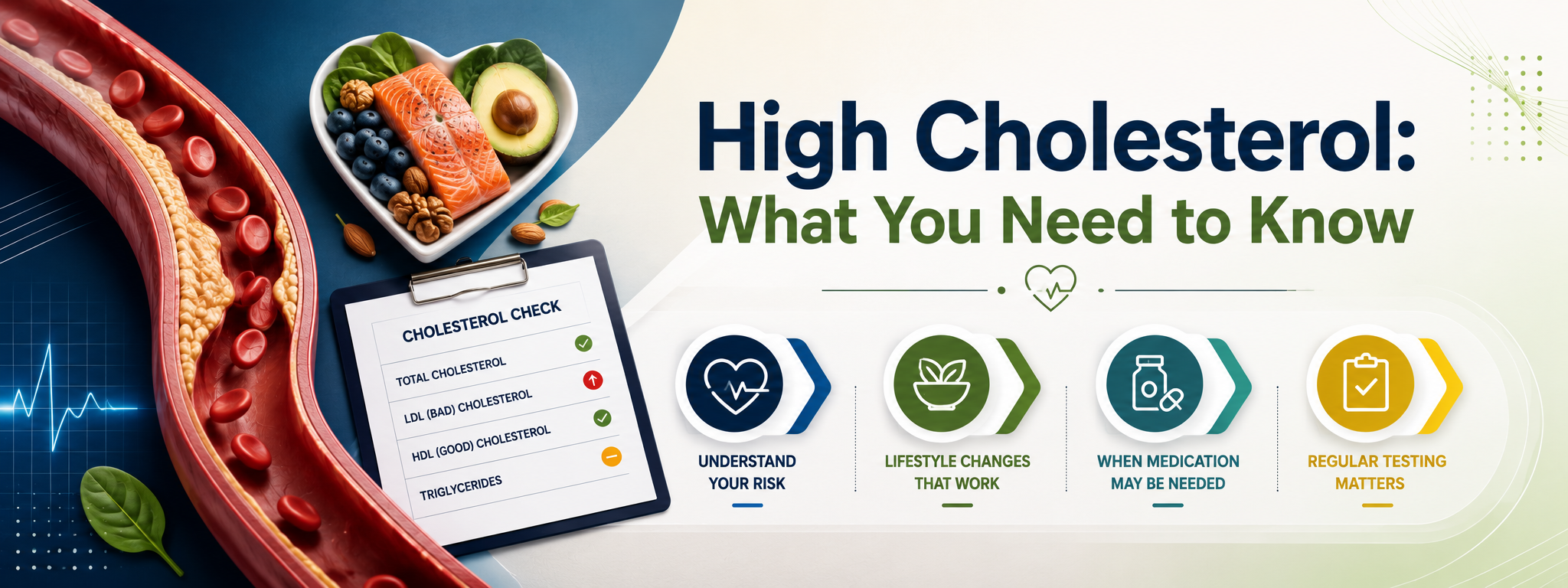
High cholesterol is one of the leading risk factors for heart disease and stroke — and it usually comes with zero symptoms. That’s why a simple blood test at your annual visit can be genuinely life-saving. Here’s what you need to know.
What Is Cholesterol?
Cholesterol is a waxy substance your body naturally produces and also takes in from food. It’s essential for building cells and producing certain hormones. But when too much circulates in your blood, it can build up as plaque in your artery walls — a process called atherosclerosis — leading to heart attack or stroke.
Breaking Down the Numbers
Your cholesterol panel includes LDL (‘bad’ cholesterol) which contributes to plaque buildup, HDL (‘good’ cholesterol) which helps remove LDL, and triglycerides. Optimal LDL is below 100 mg/dL for most adults; your target may differ based on your cardiovascular risk.
What Raises Cholesterol?
Diet high in saturated and trans fats, physical inactivity, obesity, smoking, age, and genetics all play a role. Some medical conditions — including hypothyroidism, kidney disease, and type 2 diabetes — can also affect cholesterol levels.
Lifestyle Changes That Work
Eating more fiber, replacing saturated fats with healthy unsaturated fats, reducing processed and fried foods, exercising at least 150 minutes per week, quitting smoking, and losing excess weight can all significantly improve your numbers.
When Is Medication Needed?
If lifestyle changes alone aren’t sufficient, your doctor may recommend a statin medication. Statins are well-studied, widely prescribed, and highly effective at lowering LDL and reducing cardiovascular risk.
How Often Should You Be Tested?
Adults age 20 and older should have cholesterol checked at least every 4-6 years. More frequent testing is recommended if you have existing risk factors. Gilbert Center for Family Medicine offers on-site lipid panel testing as part of routine preventive care.
Frequently Asked Questions
Can I have high cholesterol if I eat well and exercise?
Yes. Genetics play a significant role in cholesterol levels. Familial hypercholesterolemia is an inherited condition that causes high LDL regardless of diet or exercise habits. This is why routine testing matters even for people who appear healthy and maintain an active lifestyle.
Are statins safe for long-term use?
Statins have been studied extensively for decades and are considered safe for most people when used as prescribed. Some patients experience mild muscle aches, which should be reported to your doctor. Your provider will monitor liver function and adjust your treatment if needed.
How quickly can lifestyle changes lower cholesterol?
Dietary changes and increased exercise can produce measurable improvements in cholesterol in as little as 4-6 weeks. A follow-up lipid panel 3 months after making changes gives your provider a good picture of how your body is responding before deciding whether medication is needed.
Further Reading
Trusted external resources on preventive care.
Share this post: